
Wisdom Teeth
When and Why Should They Be Removed?

Dr Yvan Gaudex
Wisdom teeth, also known as third molars, can sometimes emerge properly into the mouth and be maintained under good conditions.
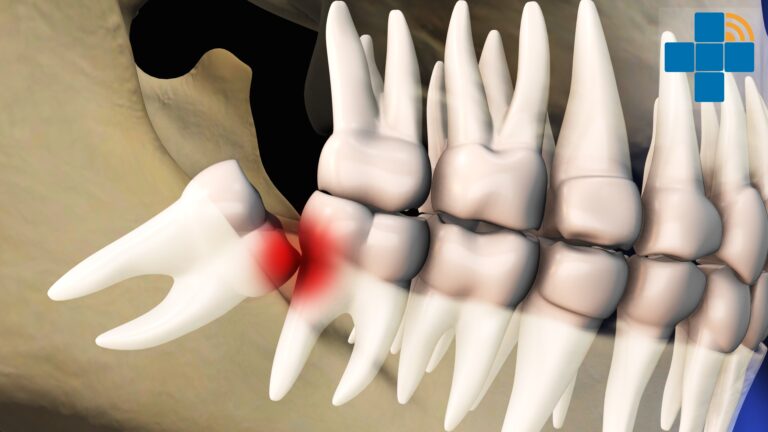
However, in many cases, their problematic position, unfavorable angulation, or partial eruption causes pain, infections, or decay (caries, abscesses) affecting neighboring teeth.
In such situations, extraction is recommended—often preventively—to avoid future complications. Today, this procedure is safe, well-regulated, and commonly performed.
Why Remove Wisdom Teeth?
Wisdom tooth extraction is not systematic. The decision depends on the space available in the jaw, the teeth’s positioning, the patient’s age, and the presence of symptoms or risk factors.
The main reasons for extraction include:
- Recurrent pain, gingival inflammation, or repeated infections (such as pericoronitis)
- Partial eruption, leaving the tooth partly impacted and prone to bacterial buildup that is difficult to eliminate
- Forward angulation, disrupting alignment or exerting harmful pressure on adjacent teeth
- Cyst formation or bone lesions around the tooth, visible on radiographs
- Orthodontic indications, to prevent relapse of dental crowding
Dr. Gaudex performs a thorough clinical and radiographic assessment to evaluate the necessity of extraction in each case.
How Is the Procedure Performed?
Wisdom tooth extraction is a frequent procedure, carried out:
- Under standard local anesthesia in most cases
- Or, if needed, under conscious sedation or general anesthesia for more complex extractions
The procedure involves several steps:
- Accessing the tooth through a small incision in the gum
- Removing a small amount of bone if the tooth is impacted or embedded
- Releasing the tooth, sometimes in sections to minimize trauma
- Closing with resorbable sutures to aid healing
All steps are performed under strict aseptic conditions with specialized surgical equipment, ensuring safety, precision, and patient comfort.
Post-Operative Recovery: What to Expect
A short recovery phase is common after the procedure, usually well managed with appropriate care:
- Moderate swelling of the cheek may occur, sometimes with minor localized bruising
- Mild chewing discomfort or sensitivity may last 2–3 days, usually well controlled with prescribed pain relievers
- A soft, lukewarm diet is recommended temporarily to avoid disturbing the surgical site
Dr. Gaudex provides precise post-operative instructions, including: adapted oral hygiene, cold application (ice packs), elevated sleeping position, and—if necessary—prescription of antibiotics or antiseptic treatment.
A follow-up appointment is always scheduled to monitor healing and ensure patient comfort.
If I Don’t Feel Pain, Should I Still Have Them Removed?
Not necessarily. Wisdom teeth do not always need to be extracted.
If they are well-positioned, fully erupted, accessible for brushing, pain-free, without local complications, and with no negative impact on neighboring teeth, they may be preserved.
This is why a thorough clinical and radiographic assessment is essential to determine the most appropriate approach for each patient.
CONCLUSION
Wisdom tooth extraction is a safe, well-controlled, and frequent procedure that effectively prevents or treats many potential oral health problems. It helps preserve the long-term health, balance, and comfort of the mouth.
Dr. Gaudex provides attentive, expert care—from assessment of your wisdom teeth to post-operative follow-up—in a professional, supportive, and personalized environment.